


Hey there, fellow rubber industry enthusiasts! As a supplier of Flux Calcined Kieselguhr, I've been getting a lot of questions lately about whether this stuff can be used in the rubber industry. So, I thought I'd sit down and write a blog post to share my thoughts and insights on the matter.
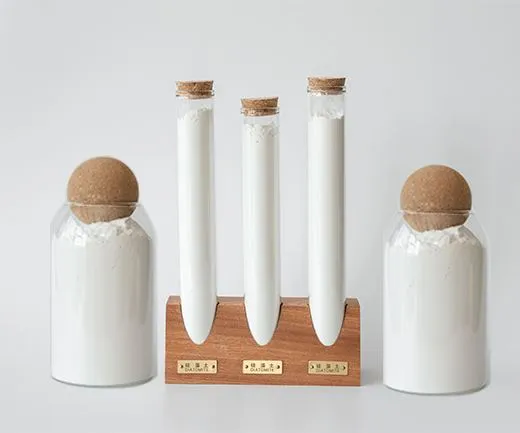
Let's start by talking a bit about what Flux Calcined Kieselguhr is. Flux Calcined Kieselguhr, also known as diatomite, is a naturally occurring sedimentary rock that's made up of the fossilized remains of diatoms - tiny, single-celled algae. When heated to high temperatures with a fluxing agent, the diatoms release their silica content, resulting in a highly porous and absorbent material. You can learn more about it here: Flux Calcined Kieselguhr.
Now, onto the main question - can it be used in the rubber industry? The short answer is yes! And there are several compelling reasons why Flux Calcined Kieselguhr can be a game-changer for rubber manufacturers.
Improved Reinforcement
One of the key benefits of using Flux Calcined Kieselguhr in rubber compounds is its ability to act as a reinforcing filler. When added to rubber, the porous structure of the kieselguhr provides a large surface area for the rubber to adhere to. This enhances the mechanical properties of the rubber, such as tensile strength, tear resistance, and abrasion resistance.
For example, in automotive tires, improved abrasion resistance is crucial for longer tire life. By incorporating Flux Calcined Kieselguhr, manufacturers can make tires that can withstand the rigors of the road for a longer period. In industrial rubber products like conveyor belts, the enhanced tear resistance provided by the kieselguhr helps to prevent premature belt failure, reducing downtime and maintenance costs.
Enhanced Processing Properties
Flux Calcined Kieselguhr also has a positive impact on the processing of rubber compounds. It can improve the flowability of the rubber during mixing and molding processes. This means that the rubber can be more easily shaped into the desired form, reducing production time and energy consumption.
The addition of kieselguhr can also help to reduce the viscosity of the rubber compound. Lower viscosity makes it easier to disperse other additives, such as vulcanizing agents and accelerators, evenly throughout the rubber. This leads to a more uniform curing process and ultimately, a higher-quality end product.
Cost-Effectiveness
In the highly competitive rubber industry, cost is always a major consideration. Flux Calcined Kieselguhr offers a cost-effective alternative to some traditional reinforcing fillers like carbon black. While carbon black is widely used for its excellent reinforcing properties, it can be relatively expensive.
Flux Calcined Kieselguhr, on the other hand, provides comparable reinforcement at a lower cost. By partially replacing carbon black with kieselguhr in rubber formulations, manufacturers can achieve significant cost savings without sacrificing too much in terms of performance. This is a win-win situation for both manufacturers and their customers.
Other Potential Applications
Beyond its use as a reinforcing and processing aid in general rubber products, Flux Calcined Kieselguhr also has some other interesting potential applications in the rubber industry.
Anti-Blocking Agent
In the production of rubber sheets and films, the sheets can sometimes stick together during storage and transportation. Flux Calcined Kieselguhr can be used as an anti-blocking agent. Its porous and granular structure creates a physical barrier between the rubber surfaces, preventing them from adhering to each other.
Filtration in Rubber Manufacturing
Rubber manufacturing processes often involve the use of various fluids, such as solvents and latex emulsions. Filter Grade Diatomaceous Earth is highly effective in filtration applications. It can remove impurities and fine particles from these fluids, ensuring the quality of the rubber products and the smooth operation of the manufacturing equipment.
Considerations and Limitations
Of course, like any material, Flux Calcined Kieselguhr isn't without its considerations and limitations. One thing to keep in mind is the potential impact on the color of the rubber. Since kieselguhr is a white or off-white powder, it can lighten the color of the rubber compound. This may or may not be a problem depending on the specific application.
Another consideration is the need for proper dispersion. If the kieselguhr isn't dispersed evenly in the rubber compound, it can lead to inconsistent properties and a lower-quality end product. Manufacturers need to ensure that they have the right mixing equipment and procedures in place to achieve good dispersion.

Conclusion
So, to sum it up, Flux Calcined Kieselguhr definitely has a place in the rubber industry. Its ability to improve reinforcement, enhance processing properties, and offer cost savings makes it a valuable addition to rubber formulations. Whether you're making tires, industrial rubber products, or rubber sheets, there's a good chance that Flux Calcined Kieselguhr can benefit your manufacturing process.
If you're interested in learning more about how Flux Calcined Kieselguhr can be used in your rubber production, or if you're looking for a reliable supplier, don't hesitate to reach out. We're here to answer your questions and help you find the right solution for your needs. You can also explore Diatomaceous Earth for Medicinal Purposes to understand more about the versatility of diatomaceous earth.
Let's start a conversation and see how we can work together to take your rubber products to the next level!
References
- "The Handbook of Fillers and Reinforcements for Plastics" by George Wypych.
- "Rubber Technology: Compounding, Processing, and Testing of Rubber" by George Kraus.


