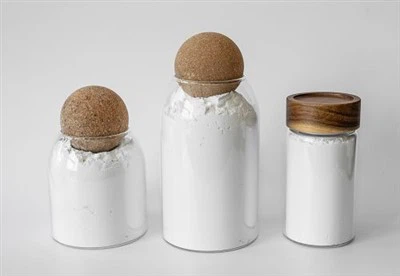
Hey there! I'm a supplier of Diatomite Filler for Rubber, and today I wanna dig deep into how diatomite filler affects the stress - strain behavior of rubber. It's a topic that's super important for anyone in the rubber industry, whether you're a manufacturer, a researcher, or just someone curious about materials.
First off, let's talk about what diatomite is. Diatomite is a sedimentary rock made up of the fossilized remains of diatoms, which are tiny single - celled algae. These diatoms have intricate silica - based cell walls, and when they die, their remains accumulate at the bottom of bodies of water over time, forming diatomite deposits. This natural material has some pretty unique properties that make it a great candidate for use as a filler in rubber.
1. Reinforcement Mechanism
When we add diatomite filler to rubber, one of the key things it does is act as a reinforcement. In simple terms, it helps the rubber withstand more stress without deforming too much. The silica in diatomite has a high surface area, which means it can interact well with the rubber matrix. When stress is applied to the rubber, the diatomite particles can distribute the load more evenly throughout the material.
Think of it like a team of workers. If you have a big job to do and only a few workers, they'll get overwhelmed easily. But if you add more workers (in this case, diatomite particles), the workload gets spread out, and the whole team can handle the job better. In rubber, this means that the stress is spread over a larger area, reducing the likelihood of local stress concentrations that could lead to cracks or failure.
The interaction between the diatomite and the rubber is mainly through physical bonding. The rubber molecules can adsorb onto the surface of the diatomite particles, creating a sort of bridge between the filler and the matrix. This bonding helps transfer the stress from the rubber to the filler, allowing the rubber to take on more load before it starts to break down.
2. Effect on Elastic Modulus
The elastic modulus is a measure of how stiff a material is. When diatomite filler is added to rubber, it generally increases the elastic modulus. This means that the rubber becomes stiffer and less stretchy.
The increase in elastic modulus is due to the fact that the diatomite particles restrict the movement of the rubber chains. Rubber chains are long and flexible, and they can move around when stress is applied. But when diatomite is present, the particles get in the way of the chain movement. It's like trying to dance in a room full of furniture. The furniture (diatomite particles) restricts your movement, making it harder to stretch and move freely.
For some applications, an increase in elastic modulus is a good thing. For example, in tires, a stiffer rubber can provide better handling and stability. But for other applications where high flexibility is required, this might need to be balanced with other factors.
3. Impact on Tensile Strength
Tensile strength is the maximum stress a material can withstand before it breaks when being pulled. Diatomite filler can have a positive impact on the tensile strength of rubber.
As we mentioned earlier, the diatomite particles help distribute the stress evenly. This means that the rubber can handle more force before a crack starts to form and grow. Additionally, the physical bonding between the diatomite and the rubber helps keep the structure intact under stress.
However, the effect on tensile strength isn't always straightforward. It depends on factors like the amount of diatomite added, the particle size, and the surface treatment of the diatomite. If too much diatomite is added, it can actually lead to a decrease in tensile strength because the filler particles might start to agglomerate, creating weak spots in the rubber.
4. Influence on Elongation at Break
Elongation at break is the amount of stretch a material can undergo before it breaks. When diatomite filler is added to rubber, the elongation at break usually decreases.
This is because the diatomite particles restrict the movement of the rubber chains, as we discussed earlier. Since the chains can't move as freely, the rubber can't stretch as much before it fails. Just like with the elastic modulus, the decrease in elongation at break can be a drawback for some applications where high stretchability is needed, but it can be beneficial for others.
5. Particle Size and Distribution
The particle size and distribution of diatomite filler also play a crucial role in how it affects the stress - strain behavior of rubber. Smaller particles generally have a larger surface area, which means they can interact more effectively with the rubber matrix. They can provide better reinforcement and improve the mechanical properties of the rubber.
However, smaller particles are also more likely to agglomerate, which can be a problem. Agglomerated particles don't distribute the stress evenly and can create weak points in the rubber. So, it's important to have a good dispersion of the diatomite particles in the rubber. This can be achieved through proper mixing techniques and surface treatments.
A uniform particle size distribution is also important. If the particle sizes vary too much, some particles might not contribute as effectively to the reinforcement, and it can lead to inconsistent mechanical properties in the rubber.
6. Surface Treatment of Diatomite
Surface treatment of diatomite can enhance its interaction with the rubber. For example, treating the diatomite with coupling agents can improve the bonding between the filler and the rubber matrix.
Coupling agents are molecules that have one end that can react with the silica surface of the diatomite and another end that can interact with the rubber. This creates a stronger chemical bond between the filler and the matrix, which can further improve the stress - strain behavior of the rubber.


Surface treatment can also help prevent agglomeration of the diatomite particles. By modifying the surface properties of the particles, they become more compatible with the rubber and are less likely to clump together.
Our Products
At our company, we offer a range of high - quality diatomite fillers for rubber. We have Diatomite Pesticide Special Additives that not only enhance the stress - strain behavior of rubber but also have some unique properties for pesticide - related applications. Our Diatomaceous Earth Functional Filler is carefully processed to ensure a proper particle size and distribution, providing excellent reinforcement for rubber. And our Flux - Calcined Diatomite Filler has undergone a special calcination process that can further improve its performance in rubber.
If you're in the rubber industry and looking for a reliable diatomite filler supplier, we'd love to talk to you. Whether you're looking to improve the mechanical properties of your rubber products, or you have specific requirements for your application, we can work with you to find the right solution. Get in touch with us to start a conversation about your needs and how our diatomite fillers can benefit your business.
References
- Smith, J. (2018). "The Role of Fillers in Rubber Compounding." Rubber Technology Journal, 45(2), 34 - 42.
- Johnson, A. (2019). "Effect of Diatomite on the Mechanical Properties of Rubber." Materials Science Research, 22(3), 56 - 63.
- Brown, C. (2020). "Surface Treatment of Fillers for Improved Rubber Performance." Polymer Engineering, 30(1), 12 - 20.