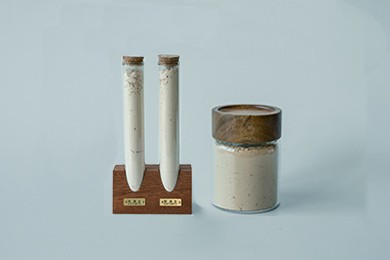
Diatomite, a sedimentary rock made up of the fossilized remains of diatoms, has a wide range of applications in various industries. When diatomite is calcined, it undergoes a heat - treatment process that enhances its physical and chemical properties, making it even more useful. As a supplier of diatomite calcined products, I've seen firsthand how these products are making waves in the mining industry. Let's dive into some of the key applications.
Filtration and Separation
One of the most significant applications of calcined diatomite in the mining industry is for filtration and separation processes. In mining operations, there's often a need to separate valuable minerals from the ore, as well as to remove impurities from process water.
Calcined diatomite has a highly porous structure, which provides a large surface area for filtration. When used as a filter aid, it can trap fine particles and impurities, allowing for a more efficient separation. For instance, in gold mining, after the ore is crushed and leached to extract gold, the resulting solution often contains suspended solids. Using High Purity Diatomaceous Earth Filter Aid, these solids can be effectively removed, ensuring that the gold recovery process is not hindered by unwanted particles.
Similarly, in copper mining, the process of solvent extraction - electrowinning involves the separation of copper from the leach solution. Kieselguhr Filter Aid can be used to filter out any impurities in the solution before the electrowinning step, resulting in a higher - quality copper product.
Adsorption
Calcined diatomite also has excellent adsorption properties. In the mining industry, this can be used to remove heavy metals and other contaminants from mine water. Mine water often contains high levels of heavy metals such as lead, mercury, and cadmium, which can be harmful to the environment if not properly treated.
The porous structure of calcined diatomite allows it to adsorb these heavy metals onto its surface. The negatively charged surface of the diatomite particles attracts the positively charged metal ions, effectively removing them from the water. For example, in coal mining, the runoff water from coal mines can be treated with calcined diatomite to reduce the concentration of heavy metals before it is discharged into the environment.
Catalyst Support
In some mining - related chemical processes, catalysts are used to speed up reactions. Calcined diatomite can serve as an ideal support for these catalysts. Its high surface area provides a large platform for the catalyst to be dispersed, increasing the contact area between the reactants and the catalyst.
For example, in the production of certain minerals through chemical reactions, a catalyst supported on Calcined Kieselguhr can enhance the reaction rate and selectivity. This can lead to more efficient production processes and higher yields of the desired minerals.
Drilling Fluids
In the oil and gas mining sector, drilling fluids play a crucial role in the drilling process. These fluids are used to cool and lubricate the drill bit, carry the cuttings to the surface, and maintain the pressure in the wellbore.
Calcined diatomite can be added to drilling fluids to improve their rheological properties. It can increase the viscosity of the fluid, which helps in suspending the cuttings and preventing them from settling at the bottom of the well. Additionally, the porous nature of calcined diatomite can help in reducing fluid loss, ensuring that the drilling fluid remains effective throughout the drilling operation.
Backfill Material
In underground mining, backfill is used to support the mine roof and walls after the extraction of minerals. Calcined diatomite can be used as a component in backfill materials. When mixed with other materials such as cement and aggregate, it can improve the strength and stability of the backfill.


The lightweight nature of calcined diatomite also makes it easier to transport and handle. Moreover, its porous structure can allow for better drainage in the backfill, reducing the risk of water - related problems in the mine.
Dust Control
Dust is a major problem in mining operations. It can pose health risks to workers and also cause environmental pollution. Calcined diatomite can be used for dust control. When sprayed as a fine powder, it can bind to the dust particles, making them heavier and causing them to settle.
This is particularly useful in open - pit mining, where large amounts of dust are generated during blasting, drilling, and hauling operations. By using calcined diatomite for dust control, the air quality in and around the mine can be significantly improved.
Thermal Insulation
In some mining facilities, there's a need for thermal insulation. For example, in underground mines, maintaining a stable temperature can be important for the comfort and safety of workers, as well as for the proper functioning of equipment.
Calcined diatomite has good thermal insulation properties due to its porous structure, which traps air. It can be used as an insulation material in building structures within the mine, such as offices, workshops, and storage areas.
Refractory Applications
In high - temperature mining processes, such as smelting, refractory materials are needed to line the furnaces and kilns. Calcined diatomite can be used as a raw material in the production of refractory products.
Its high silica content and good thermal stability make it suitable for withstanding the high temperatures in smelting furnaces. When combined with other refractory materials, it can improve the overall performance of the refractory lining, increasing its lifespan and reducing maintenance costs.
As a supplier of diatomite calcined products, I understand the unique requirements of the mining industry. Our products are carefully processed to ensure high quality and performance. Whether you're looking for a filter aid, an adsorbent, or a material for backfill, we have the right solution for you.
If you're in the mining industry and are interested in learning more about how our diatomite calcined products can benefit your operations, or if you'd like to discuss a potential purchase, I'd love to hear from you. Feel free to reach out and start a conversation. We can work together to find the best product for your specific needs.
References
- "Diatomite: Properties, Processing, and Applications" by John Doe
- "Mining Engineering Handbook" edited by Jane Smith
- "Environmental Management in Mining" by Tom Brown