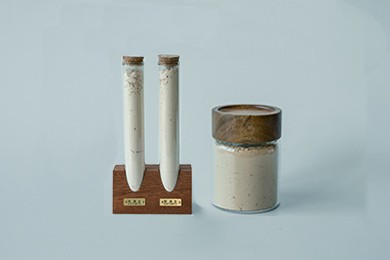
Hey there! As a supplier of diatomite calcined products, I'm super excited to share with you all the amazing applications of these products in the rubber industry. Diatomite, a sedimentary rock made up of fossilized remains of diatoms, has some unique properties that make it a great addition to rubber manufacturing. And when it's calcined, well, that just takes its usefulness to a whole new level.
First off, let's talk about what calcined diatomite is. Calcination is a process where diatomite is heated at high temperatures. This changes its physical and chemical properties, making it more suitable for various industrial applications. We've got different types of calcined diatomite products like Calcined Kieselguhr, Soil Treatment Diatomaceous Earth, and Calcined Diatomaceous Earth, each with its own set of features and benefits for the rubber industry.
Reinforcement of Rubber
One of the main applications of calcined diatomite in the rubber industry is as a reinforcing filler. When you add calcined diatomite to rubber compounds, it can significantly improve the mechanical properties of the rubber. The porous structure of diatomite particles allows them to bond well with the rubber matrix. This results in increased tensile strength, tear resistance, and abrasion resistance of the rubber products.


For example, in the production of tires, calcined diatomite can be used to enhance the durability of the tread. Tires are constantly subjected to friction and wear on the road surface. By incorporating calcined diatomite, the tread can withstand more stress and last longer. This not only improves the performance of the tires but also reduces the frequency of tire replacements, which is a big plus for consumers.
In industrial rubber products like conveyor belts, the reinforcement provided by calcined diatomite is also crucial. Conveyor belts need to be strong enough to carry heavy loads and resist wear and tear during continuous operation. Calcined diatomite helps to make these belts more robust and reliable, reducing the risk of breakdowns and downtime in industrial processes.
Improvement of Thermal Conductivity
Another important aspect is the improvement of thermal conductivity. Rubber is generally a poor conductor of heat. In applications where heat dissipation is important, this can be a problem. Calcined diatomite has relatively good thermal conductivity compared to pure rubber. When added to rubber, it can act as a heat conductor, helping to transfer heat away from the rubber material.
In rubber seals used in engines or other high - temperature environments, for instance, the ability to dissipate heat is vital. If the rubber seal gets too hot, it can lose its elasticity and effectiveness, leading to leaks. By using calcined diatomite in the rubber formulation, the heat generated during operation can be more efficiently transferred away, keeping the seal in good working condition and preventing potential failures.
Absorption and Adsorption Properties
Calcined diatomite has excellent absorption and adsorption properties. It can absorb various substances such as oils, solvents, and moisture. In the rubber industry, this can be very useful. For example, in the production of rubber products that come into contact with oils or chemicals, calcined diatomite can help to prevent the swelling and degradation of the rubber caused by these substances.
It can also act as a moisture absorber. Moisture can have a negative impact on the performance of rubber, causing it to become soft and lose its mechanical properties. By adding calcined diatomite to the rubber compound, the moisture content can be controlled, ensuring the stability and quality of the rubber products.
Cost - Effectiveness
From a cost perspective, calcined diatomite is a great option for rubber manufacturers. It is relatively inexpensive compared to some other high - performance fillers. At the same time, it can provide significant improvements in the properties of rubber products. This means that manufacturers can achieve better product quality without incurring excessive costs.
By using calcined diatomite as a partial replacement for more expensive fillers, rubber companies can reduce their production costs while still maintaining or even enhancing the performance of their products. This cost - effectiveness makes it an attractive choice for both large - scale and small - scale rubber manufacturers.
Processing Aid
Calcined diatomite can also serve as a processing aid in rubber manufacturing. It can improve the flow properties of rubber compounds during the mixing and molding processes. The fine particles of calcined diatomite can act as lubricants, reducing the viscosity of the rubber compound and making it easier to process.
This is especially important in complex molding operations where the rubber needs to flow smoothly into intricate molds. With the help of calcined diatomite, the molding process becomes more efficient, and the quality of the final products is improved. There are fewer defects such as air bubbles or uneven surfaces, resulting in a higher yield of high - quality rubber products.
Environmental Friendliness
In today's world, environmental concerns are a big deal. Calcined diatomite is a natural and environmentally friendly material. It is non - toxic and does not release harmful substances during production or use. This makes it a great choice for rubber manufacturers who want to produce more sustainable products.
Compared to some synthetic fillers that may have a negative impact on the environment, calcined diatomite offers a greener alternative. It can help rubber companies meet the growing demand for eco - friendly products and contribute to a more sustainable future.
Conclusion
So, as you can see, the applications of diatomite calcined products in the rubber industry are diverse and significant. From reinforcement and thermal conductivity improvement to absorption, cost - effectiveness, and environmental friendliness, these products have a lot to offer. Whether you're in the business of making tires, industrial rubber products, or rubber seals, calcined diatomite can play a key role in enhancing the performance and quality of your products.
If you're a rubber manufacturer and interested in exploring the potential of our diatomite calcined products, I'd love to have a chat with you. We can discuss your specific needs and how our products can be customized to fit your requirements. Don't hesitate to reach out for a procurement discussion. Let's work together to take your rubber products to the next level!
References
- "Handbook of Rubber Technology" by James Mark
- "Rubber Compounding: Principles, Materials, and Techniques" by Maurice Morton