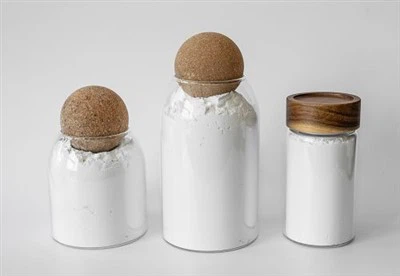
As a supplier of Calcined Diatomite Filter Aid, I've witnessed firsthand the growing demand for this remarkable product across various industries. One of the most frequently asked questions by our customers is about the dispersibility of Calcined Diatomite Filter Aid in liquids. In this blog, I'll delve into the concept of dispersibility, its importance, the factors affecting it, and how it impacts the performance of our filter aid.
Understanding Dispersibility
Dispersibility refers to the ability of a solid substance to break down into individual particles and distribute evenly throughout a liquid medium. In the context of Calcined Diatomite Filter Aid, good dispersibility ensures that the diatomite particles are uniformly suspended in the liquid being filtered, which is crucial for achieving optimal filtration efficiency. When the filter aid is well - dispersed, it can form a uniform filter cake on the filter medium, allowing for consistent flow rates and effective removal of impurities.
The Importance of Dispersibility in Filtration
Effective filtration depends on the proper formation of a filter cake. A well - dispersed Calcined Diatomite Filter Aid forms a stable and uniform cake structure. This cake acts as a physical barrier, trapping suspended solids and allowing only the clear liquid to pass through. If the dispersibility is poor, the filter aid particles may agglomerate, leading to an uneven filter cake. This can result in channeling, where the liquid finds preferential paths through the cake, bypassing the filtration mechanism. As a consequence, the filtration efficiency drops, and the clarity of the filtrate is compromised.
Factors Affecting the Dispersibility of Calcined Diatomite Filter Aid in Liquids
Particle Size and Shape
The size and shape of diatomite particles play a significant role in their dispersibility. Smaller particles generally have a higher surface - area - to - volume ratio, which can enhance their interaction with the liquid molecules, promoting better dispersion. However, if the particles are too fine, they may also tend to agglomerate due to van der Waals forces. On the other hand, the unique natural shape of diatomite particles, often porous and irregular, can influence how they interact with the liquid. Our Calcined Diatomaceous Earth is carefully processed to achieve an optimal particle size and shape distribution for excellent dispersibility.
Surface Chemistry
The surface chemistry of the diatomite particles affects their interaction with the liquid medium. Diatomite has a siliceous surface, which can have different degrees of hydrophilicity or hydrophobicity depending on the calcination process and any surface treatments. In polar liquids, a hydrophilic surface can promote better wetting and dispersion of the particles. Our manufacturing process is designed to control the surface chemistry of the Calcined Diatomite Filter Aid to ensure good compatibility and dispersibility with a wide range of liquids.
Liquid Properties
The properties of the liquid in which the diatomite is dispersed also matter. Viscosity is an important factor; more viscous liquids can impede the movement of the diatomite particles, making it more difficult to achieve good dispersion. Temperature can also affect the viscosity of the liquid and the solubility of any additives that may be present. Additionally, the pH of the liquid can influence the surface charge of the diatomite particles, which in turn affects their dispersion behavior.
Mixing and Agitation
Proper mixing and agitation are essential for achieving good dispersibility. The intensity and duration of the mixing process can significantly impact how well the diatomite particles are dispersed in the liquid. Insufficient mixing may result in clumps of undispersed particles, while over - mixing can potentially break down the particles or cause them to re - agglomerate. We recommend using appropriate mixing equipment and following specific mixing guidelines to ensure optimal dispersibility.
Measuring Dispersibility
There are several methods to measure the dispersibility of Calcined Diatomite Filter Aid in liquids. One common approach is visual inspection. By observing the suspension under a microscope or simply looking at the uniformity of the mixture, one can get a rough idea of the dispersion quality. Another method is sedimentation analysis. If the diatomite particles settle quickly, it may indicate poor dispersibility. More advanced techniques, such as laser diffraction particle size analysis, can be used to measure the particle size distribution in the dispersed state, which can provide quantitative information about the dispersibility.
Impact on Different Industries
Food and Beverage Industry
In the food and beverage industry, the dispersibility of Calcined Diatomite Filter Aid is crucial for producing clear and impurity - free products. For example, in beer brewing, a well - dispersed filter aid helps to remove yeast, proteins, and other solids, resulting in a bright and stable beer. Our Diatomaceous Earth Filter Aid for Filtration is designed to meet the strict quality and safety standards of this industry, ensuring excellent dispersibility in various liquid media used in food and beverage processing.
Chemical Industry
In chemical processes, the dispersibility of the filter aid can affect the efficiency of separation operations. For instance, in the production of pharmaceuticals or specialty chemicals, a uniform filter cake formed by well - dispersed diatomite can improve the purity of the final product. The ability of our Calcined Diatomite Filter Aid to disperse well in different chemical solvents makes it a versatile choice for chemical filtration applications.


Water Treatment
In water treatment, the dispersibility of the filter aid is important for removing suspended solids, turbidity, and microorganisms. A well - dispersed filter aid can effectively trap these contaminants, improving the quality of the treated water. Our Soil Treatment Diatomaceous Earth can also be used in some water treatment processes, where its dispersibility in water is a key factor in its effectiveness.
Ensuring Optimal Dispersibility
To ensure optimal dispersibility of our Calcined Diatomite Filter Aid, we conduct rigorous quality control during the manufacturing process. We carefully select the raw materials and optimize the calcination conditions to achieve the desired particle size, shape, and surface properties. We also provide detailed technical support to our customers, including guidelines on mixing and handling the filter aid.
Conclusion
The dispersibility of Calcined Diatomite Filter Aid in liquids is a critical factor that affects its performance in filtration applications across various industries. Understanding the factors that influence dispersibility, such as particle size, surface chemistry, liquid properties, and mixing conditions, is essential for achieving optimal filtration results. As a supplier, we are committed to providing high - quality Calcined Diatomite Filter Aid with excellent dispersibility.
If you are interested in purchasing our Calcined Diatomite Filter Aid or have any questions about its dispersibility, please feel free to engage with us. We are ready to have in - depth discussions with you about your specific filtration needs and how our products can meet them.
References
- Smith, J. (20XX). "Filtration Technology and Applications". Publisher Name.
- Johnson, A. (20XX). "The Role of Diatomite in Industrial Filtration". Journal of Industrial Filtration, Vol. XX, Issue XX, pp. XX - XX.