As a supplier of Diatomaceous Earth for Filter, I've witnessed firsthand the remarkable properties and applications of this natural product. In this blog, I'll delve into the efficiency of diatomaceous earth for filters in removing turbidity, exploring its mechanisms, advantages, and real - world applications.
Understanding Turbidity and Its Impact
Turbidity refers to the cloudiness or haziness of a fluid caused by large numbers of individual particles that are generally invisible to the naked eye. These particles can include clay, silt, finely divided organic and inorganic matter, soluble colored organic compounds, algae, and other microscopic organisms. High turbidity in water can cause aesthetic problems, such as an unappealing appearance and taste, and can also harbor harmful pathogens. In industrial processes, turbidity can affect the quality of products and the efficiency of equipment.
How Diatomaceous Earth Works as a Filter Medium
Diatomaceous earth is a sedimentary rock composed of the fossilized remains of diatoms, a type of hard - shelled algae. These diatoms have intricate and porous structures, which give diatomaceous earth its unique filtering properties. When used as a filter medium, diatomaceous earth forms a porous cake on the surface of a filter element. As the turbid fluid passes through this cake, the small pores in the diatomaceous earth trap the suspended particles, allowing only the clear fluid to pass through.
The filtration process can be divided into two main types: surface filtration and depth filtration. In surface filtration, particles are trapped on the surface of the diatomaceous earth cake. Depth filtration, on the other hand, occurs when particles penetrate into the pores of the diatomaceous earth and are trapped within the cake structure. This dual - action filtration mechanism allows diatomaceous earth to effectively remove particles of various sizes, from large suspended solids to fine colloidal particles.
Efficiency in Removing Turbidity
The efficiency of diatomaceous earth in removing turbidity is quite high. It can remove particles as small as 1 - 2 microns, which is much smaller than what many other common filter media can achieve. This high level of filtration is due to the unique pore structure of diatomaceous earth. The pores are not only small but also interconnected, creating a labyrinth - like path for the fluid to pass through. As a result, particles are more likely to be trapped within the cake.
In water treatment applications, diatomaceous earth filters can reduce turbidity levels from hundreds of nephelometric turbidity units (NTU) to less than 1 NTU. This significant reduction in turbidity not only improves the appearance and taste of the water but also reduces the risk of water - borne diseases. In industrial processes, such as brewing, wine - making, and pharmaceutical manufacturing, diatomaceous earth filters are used to clarify liquids, remove impurities, and improve product quality.
Advantages of Using Diatomaceous Earth for Turbidity Removal
- High Filtration Efficiency: As mentioned earlier, diatomaceous earth can remove a wide range of particle sizes, providing a high level of clarity to the filtered fluid.
- Chemical Inertness: Diatomaceous earth is chemically inert, which means it does not react with most chemicals in the fluid being filtered. This makes it suitable for use in a variety of applications, including food and beverage processing and pharmaceutical manufacturing.
- Low Cost: Compared to some other high - performance filter media, diatomaceous earth is relatively inexpensive. This makes it an attractive option for large - scale filtration operations.
- Easy to Use: Diatomaceous earth can be easily added to existing filtration systems. It can be pre - coated on filter elements or used as a body feed to enhance the filtration process.
Different Types of Diatomaceous Earth for Filtration
There are different types of diatomaceous earth available for filtration, each with its own characteristics and applications. Industrial Diatomaceous Earth is commonly used in industrial filtration processes, such as wastewater treatment and chemical processing. It has a relatively high filtration rate and can handle large volumes of turbid fluid.

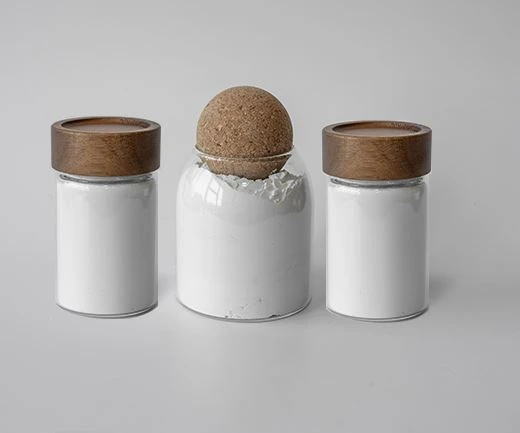
Flux Calcined Kieselguhr is a type of diatomaceous earth that has been heat - treated with a fluxing agent. This process enhances the filtration properties of the diatomaceous earth, making it more suitable for applications where high - quality filtration is required, such as in the pharmaceutical and food industries.
Diatomaceous Earth for Filtration is a general - purpose product that can be used in a wide range of filtration applications, from home water filters to industrial - scale filtration systems.
Real - World Applications
In the water treatment industry, diatomaceous earth filters are used in both municipal and private water supplies. They are often used as a pre - treatment step before other purification processes, such as reverse osmosis or disinfection. By removing turbidity, diatomaceous earth filters can extend the lifespan of downstream equipment and improve the overall efficiency of the water treatment process.
In the food and beverage industry, diatomaceous earth is used to clarify liquids such as beer, wine, fruit juices, and edible oils. It helps to remove yeast, bacteria, and other suspended solids, resulting in a clear and stable product. In the pharmaceutical industry, diatomaceous earth filters are used to purify pharmaceutical solutions, remove impurities, and ensure product quality.
Factors Affecting Filtration Efficiency
While diatomaceous earth is highly effective in removing turbidity, several factors can affect its filtration efficiency. The particle size distribution of the diatomaceous earth is an important factor. Finer - grained diatomaceous earth generally provides higher filtration efficiency but may also result in a lower flow rate. The type and concentration of the suspended particles in the fluid also play a role. Some particles may be more difficult to remove than others, depending on their size, shape, and surface properties.
The operating conditions of the filtration system, such as the pressure, flow rate, and temperature, can also affect the efficiency of diatomaceous earth filters. Higher pressures can increase the filtration rate but may also cause the diatomaceous earth cake to compact, reducing its permeability. Similarly, high flow rates may cause particles to bypass the filter cake, resulting in lower filtration efficiency.
Conclusion
In conclusion, diatomaceous earth is a highly efficient filter medium for removing turbidity. Its unique pore structure, high filtration efficiency, chemical inertness, and low cost make it a popular choice in a wide range of applications, from water treatment to food and beverage processing. As a supplier of Diatomaceous Earth for Filter, I am committed to providing high - quality products that meet the diverse needs of our customers.
If you are interested in learning more about our diatomaceous earth products or have specific filtration requirements, we invite you to contact us for a detailed discussion. Our team of experts is ready to assist you in finding the most suitable solution for your turbidity removal needs.
References
- Amirtharajah, A., & O'Melia, C. R. (1990). Coagulation and Filtration in Water and Wastewater Treatment. Butterworth - Heinemann.
- Gregory, J. (2006). Coagulation and Flocculation: Theory and Practice. Wiley - VCH.
- Letterman, R. D. (2009). Water Quality and Treatment: A Handbook of Community Water Supplies. McGraw - Hill.