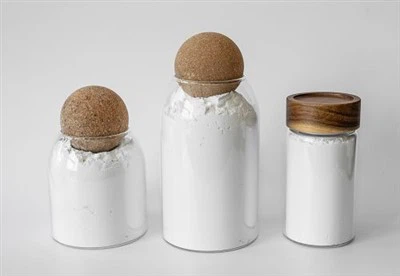
Kieselguhr, also known as diatomite, is a naturally occurring, soft, siliceous sedimentary rock that is easily crumbled into a fine white to off-white powder. It has a high porosity and a large surface area, which makes it an excellent filler aid in various industries. As a leading supplier of Kieselguhr Filler Aid, I often receive inquiries about its refractive index. In this blog post, I will delve into the concept of refractive index, discuss the refractive index of Kieselguhr Filler Aid, and explore its implications in different applications.
Understanding Refractive Index
The refractive index is a fundamental physical property of a material that describes how light propagates through it. It is defined as the ratio of the speed of light in a vacuum to the speed of light in the material. Mathematically, it is expressed as:
[n = \frac{c}{v}]
where (n) is the refractive index, (c) is the speed of light in a vacuum ((c\approx 3\times 10^{8}\ m/s)), and (v) is the speed of light in the material. The refractive index of a material determines how much light is bent, or refracted, when it passes from one medium to another. A higher refractive index means that light travels more slowly through the material and is bent more.
The refractive index of a material depends on several factors, including its chemical composition, density, and the wavelength of light. Different materials have different refractive indices, which can range from less than 1 (for some gases) to over 3 (for some crystals). The refractive index is an important parameter in optics, as it affects the behavior of light in lenses, prisms, and other optical components.


Refractive Index of Kieselguhr Filler Aid
Kieselguhr is primarily composed of the fossilized remains of diatoms, which are single-celled algae with silica shells. The chemical composition of Kieselguhr is mainly silica ((SiO_{2})), with small amounts of other minerals such as alumina ((Al_{2}O_{3})), iron oxide ((Fe_{2}O_{3})), and calcium oxide ((CaO)). The refractive index of pure silica is approximately 1.46, but the refractive index of Kieselguhr Filler Aid can vary depending on its purity, particle size, and processing method.
In general, the refractive index of Kieselguhr Filler Aid ranges from about 1.4 - 1.5. This relatively low refractive index makes it a suitable filler in applications where transparency or low light scattering is desired. For example, in the cosmetics industry, Kieselguhr can be used as a filler in products such as foundations, powders, and eyeshadows. Its low refractive index helps to create a natural, matte finish by reducing the reflection of light from the skin's surface. You can learn more about Diatomite Filler for Cosmetics.
In the paint and coating industry, Kieselguhr Filler Aid can be added to improve the hiding power, durability, and anti-settling properties of the paint. The low refractive index of Kieselguhr allows it to blend well with the resin and other components of the paint, resulting in a smooth and uniform finish. Additionally, its porous structure can absorb excess moisture and prevent the growth of mold and mildew.
In the pesticide industry, Kieselguhr can be used as a carrier or filler for pesticides. Its low refractive index and high porosity make it an effective adsorbent, which can help to improve the stability and efficacy of the pesticide formulation. You can find more information about Diatomite Filler for Pesticides.
Factors Affecting the Refractive Index of Kieselguhr Filler Aid
As mentioned earlier, the refractive index of Kieselguhr Filler Aid can be influenced by several factors. Here are some of the key factors:
Purity
The purity of Kieselguhr is an important factor that affects its refractive index. Higher purity Kieselguhr, which contains a higher percentage of silica, will have a refractive index closer to that of pure silica (1.46). Impurities such as clay, organic matter, and other minerals can increase the refractive index and affect the optical properties of the filler.
Particle Size
The particle size of Kieselguhr Filler Aid can also have an impact on its refractive index. Smaller particles tend to have a higher surface area to volume ratio, which can lead to increased light scattering and a slightly higher refractive index. However, the effect of particle size on the refractive index is relatively small compared to other factors such as purity and chemical composition.
Processing Method
The processing method used to produce Kieselguhr Filler Aid can affect its refractive index. For example, flux-calcined diatomite, which is produced by heating diatomite with a fluxing agent at high temperatures, can have a different refractive index compared to raw or calcined diatomite. Flux-calcined diatomite has a more crystalline structure and a higher density, which can result in a slightly higher refractive index. You can explore Flux-Calcined Diatomite Filler for more details.
Applications of Kieselguhr Filler Aid Based on Refractive Index
The refractive index of Kieselguhr Filler Aid plays a crucial role in its various applications. Here are some examples:
Cosmetics
In cosmetics, the low refractive index of Kieselguhr helps to create a natural and matte finish. It can absorb excess oil and sebum from the skin, reducing the appearance of shine and giving the skin a smooth and velvety texture. Kieselguhr can also be used as a bulking agent in powder products, improving their spreadability and adhesion.
Paints and Coatings
In paints and coatings, the low refractive index of Kieselguhr allows it to blend well with the resin and other components, resulting in a uniform and transparent finish. It can also improve the hiding power and durability of the paint by filling in the pores and preventing the penetration of moisture and oxygen.
Pesticides
In the pesticide industry, the low refractive index and high porosity of Kieselguhr make it an ideal carrier or filler for pesticides. It can adsorb the active ingredients of the pesticide and release them slowly over time, improving the efficacy and stability of the formulation.
Conclusion
The refractive index of Kieselguhr Filler Aid is an important property that affects its performance in various applications. Ranging from about 1.4 - 1.5, its relatively low refractive index makes it suitable for use in cosmetics, paints and coatings, pesticides, and other industries where transparency, low light scattering, or adsorption properties are desired. As a supplier of Kieselguhr Filler Aid, we understand the importance of providing high-quality products with consistent refractive indices. Our products are carefully processed and tested to ensure that they meet the specific requirements of our customers.
If you are interested in learning more about our Kieselguhr Filler Aid products or would like to discuss your specific needs, please feel free to contact us. We are committed to providing excellent customer service and high-quality products to help you achieve your goals.
References
- "Diatomite: Properties, Processing, and Applications" by R. A. Howie and R. A. W. Dry.
- "Optics" by Eugene Hecht.
- "Cosmetic Science and Technology" by Harry P. F. and Gerald A. McEwen.