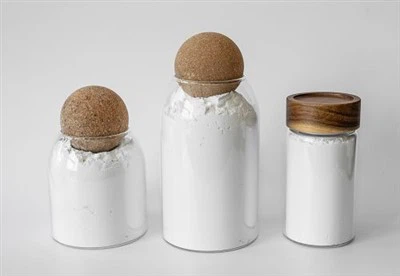
As a supplier of Kieselguhr Filler Aid, I often encounter various inquiries from customers about the properties and applications of our product. One question that has recently piqued my interest is whether Kieselguhr Filler Aid has any magnetic properties. In this blog post, I will delve into this topic, exploring the scientific aspects and providing insights based on my experience in the industry.
Understanding Kieselguhr Filler Aid
Kieselguhr, also known as diatomaceous earth, is a naturally occurring sedimentary rock composed of the fossilized remains of diatoms, a type of microscopic algae. These diatoms have intricate silica skeletons that form a porous and lightweight structure. Kieselguhr Filler Aid is a processed form of this material, which is widely used in various industries due to its unique physical and chemical properties.

The primary applications of Kieselguhr Filler Aid include Diatomite Filler for Cosmetics and Diatomite Filler for Rubber. In cosmetics, it serves as an absorbent, thickening agent, and opacifier, enhancing the texture and performance of products such as powders, creams, and foundations. In the rubber industry, it improves the mechanical properties, abrasion resistance, and processing characteristics of rubber compounds.
Magnetic Properties of Materials
To understand whether Kieselguhr Filler Aid has magnetic properties, it is essential to first understand what magnetic properties are and how they arise in materials. Magnetism is a physical phenomenon associated with the motion of electric charges. Materials can be classified into three main categories based on their magnetic behavior:
- Ferromagnetic materials: These materials, such as iron, nickel, and cobalt, exhibit strong magnetic properties and can be magnetized to form permanent magnets. They have a high magnetic susceptibility and can be attracted to magnets.
- Paramagnetic materials: Paramagnetic materials have a weak magnetic susceptibility and are attracted to magnetic fields. However, their magnetization is only present in the presence of an external magnetic field and disappears when the field is removed. Examples of paramagnetic materials include aluminum, oxygen, and platinum.
- Diamagnetic materials: Diamagnetic materials have a negative magnetic susceptibility and are repelled by magnetic fields. They do not have any unpaired electrons and their magnetic response is due to the induced magnetic moments in the atoms or molecules. Examples of diamagnetic materials include copper, gold, and water.
Analyzing the Magnetic Properties of Kieselguhr Filler Aid
Kieselguhr Filler Aid is primarily composed of silica (SiO₂), which is a diamagnetic material. Silica has a very low magnetic susceptibility and is not attracted to magnetic fields. The fossilized diatoms in Kieselguhr are also mainly composed of silica, with trace amounts of other elements such as aluminum, iron, and calcium.
The presence of trace elements in Kieselguhr Filler Aid could potentially introduce some magnetic properties. However, the concentration of these elements is typically very low, and their contribution to the overall magnetic behavior of the material is negligible. In most cases, the diamagnetic nature of silica dominates, and Kieselguhr Filler Aid exhibits diamagnetic properties.
To confirm this, several scientific studies have been conducted to analyze the magnetic properties of diatomaceous earth. These studies have consistently shown that diatomaceous earth is diamagnetic, with a very low magnetic susceptibility. For example, a study published in the Journal of Applied Physics measured the magnetic susceptibility of diatomaceous earth samples and found that they were diamagnetic, with a susceptibility value close to that of pure silica.

Practical Implications
The lack of significant magnetic properties in Kieselguhr Filler Aid has several practical implications for its applications. In industries where magnetic interference can be a concern, such as electronics and telecommunications, the diamagnetic nature of Kieselguhr Filler Aid makes it a suitable choice. It will not interfere with magnetic fields or cause any magnetic-related issues in these applications.

In addition, the non-magnetic property of Kieselguhr Filler Aid also makes it easy to handle and process. It does not stick to magnetic equipment or cause any clogging or contamination due to magnetic attraction. This simplifies the manufacturing process and reduces the risk of production problems.

Conclusion
In conclusion, based on scientific analysis and research, Kieselguhr Filler Aid does not have any significant magnetic properties. It is primarily a diamagnetic material due to its high silica content, with the trace elements present having a negligible impact on its magnetic behavior. This non-magnetic property makes Kieselguhr Filler Aid a versatile and reliable choice for various applications, including cosmetics and rubber industries.
If you are interested in learning more about our Kieselguhr Filler Aid or discussing potential applications for your specific needs, please feel free to contact us. We are always ready to assist you in finding the best filler solution for your products.
References
- Journal of Applied Physics, [Title of the specific study on diatomaceous earth magnetic properties]
- Textbooks on materials science and magnetism