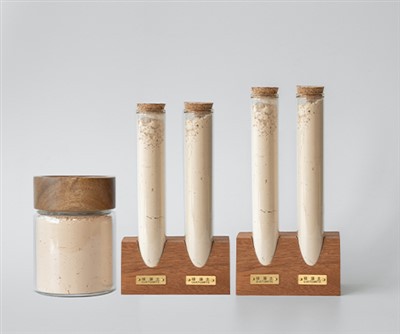
As a supplier of Diatomaceous Earth for Filter, I've witnessed firsthand the remarkable properties and wide - ranging applications of this natural wonder. One of the most crucial and interesting applications is its ability to filter asbestos fibers. In this blog, I'll delve into the science behind how diatomaceous earth filters asbestos fibers, exploring its structure, filtration mechanisms, and real - world implications.
Understanding Diatomaceous Earth
Diatomaceous earth is a sedimentary rock composed of the fossilized remains of diatoms, which are single - celled algae. These diatoms have intricate and porous silica shells. The unique structure of diatomaceous earth gives it high porosity, large surface area, and low density. These physical properties make it an excellent candidate for filtration purposes.
The silica shells of diatoms have a variety of shapes, such as cylinders, spheres, and discs, with pore sizes ranging from a few micrometers to tens of micrometers. This diverse pore size distribution allows diatomaceous earth to trap particles of different sizes effectively.
Asbestos: A Hazardous Material
Asbestos is a group of naturally occurring fibrous silicate minerals. It was widely used in the past due to its heat resistance, strength, and insulating properties. However, asbestos fibers are extremely hazardous to human health. When asbestos fibers are inhaled, they can lodge in the lungs, causing serious diseases such as asbestosis, lung cancer, and mesothelioma.
Asbestos fibers come in different types, including chrysotile, amosite, and crocidolite. These fibers are typically very thin, with diameters ranging from 0.1 to 1 micrometer and lengths that can be several millimeters. Their small size and high aspect ratio (length to diameter ratio) make them difficult to filter using conventional methods.
Filtration Mechanisms of Diatomaceous Earth for Asbestos Fibers
Physical Filtration
The most basic filtration mechanism of diatomaceous earth is physical filtration. The porous structure of diatomaceous earth acts as a sieve. Asbestos fibers larger than the pore sizes of the diatomaceous earth are physically trapped within the pores. The complex network of pores in diatomaceous earth forces the fluid (usually air or water) containing asbestos fibers to flow through a tortuous path. This increases the probability of asbestos fibers coming into contact with the pore walls and getting trapped.
For example, in a water filtration system, water containing asbestos fibers is passed through a layer of diatomaceous earth. The larger asbestos fibers are unable to pass through the pores and are retained on the surface or within the diatomaceous earth matrix.


Adsorption
In addition to physical filtration, diatomaceous earth can also adsorb asbestos fibers. The surface of diatomaceous earth has a certain charge and chemical properties that allow it to attract and hold asbestos fibers. The silica surface of diatomaceous earth can form weak chemical bonds with the asbestos fibers through mechanisms such as van der Waals forces and electrostatic interactions.
Adsorption is particularly important for filtering smaller asbestos fibers that may be able to pass through the pores of diatomaceous earth. These smaller fibers can be adsorbed onto the surface of the diatomaceous earth particles, effectively removing them from the fluid.
Depth Filtration
Diatomaceous earth provides depth filtration, which means that the filtration occurs throughout the entire thickness of the diatomaceous earth layer. As the fluid containing asbestos fibers passes through the layer, fibers are trapped at different depths within the diatomaceous earth. This is in contrast to surface filtration, where particles are only trapped on the surface of the filter medium.
Depth filtration is beneficial because it allows for a higher loading capacity of asbestos fibers. The diatomaceous earth layer can continue to filter effectively even as the surface pores become partially blocked with trapped fibers.
Real - World Applications of Diatomaceous Earth in Asbestos Filtration
Water Treatment
In water treatment plants, diatomaceous earth is used to remove asbestos fibers from contaminated water sources. Water Treatment Of Diatomaceous Earth describes in detail how diatomaceous earth filters can be integrated into water treatment processes. The water is first pre - treated to remove larger particles and then passed through a diatomaceous earth filter. The filter can effectively reduce the concentration of asbestos fibers in the water to levels that are safe for human consumption.
Air Filtration
In industrial settings where asbestos may be present, such as asbestos - containing building demolition sites or asbestos manufacturing plants, diatomaceous earth - based air filters are used to protect workers and the environment. These filters can trap asbestos fibers in the air, preventing their inhalation. The high porosity and large surface area of diatomaceous earth make it an efficient air - filtering medium.
Advantages of Using Diatomaceous Earth for Asbestos Filtration
Cost - Effectiveness
Diatomaceous earth is a relatively inexpensive and abundant natural material. Compared to some high - tech filtration materials, the cost of using diatomaceous earth for asbestos filtration is much lower. How Much Is A Ton Of Diatomaceous Earth provides information on the cost aspect of diatomaceous earth, which is an important consideration for large - scale filtration applications.
High Filtration Efficiency
As mentioned earlier, the unique structure of diatomaceous earth allows it to trap asbestos fibers effectively through multiple filtration mechanisms. It can achieve high removal rates of asbestos fibers, making it a reliable filtration option.
Environmental Friendliness
Diatomaceous earth is a natural and non - toxic material. Unlike some chemical - based filtration methods, using diatomaceous earth for asbestos filtration does not introduce additional pollutants into the environment. After use, the spent diatomaceous earth can be disposed of in an environmentally friendly manner, depending on local regulations.
Other Applications of Diatomaceous Earth in Filtration
Diatomaceous earth is not only used for asbestos filtration but also has a wide range of other filtration applications. For example, in the beer industry, Diatomite Filter Aid for Beer explains how diatomaceous earth is used as a filter aid to clarify beer. It can remove yeast, proteins, and other suspended particles, resulting in a clear and stable beer product.
Contact for Purchase and Collaboration
If you are interested in using diatomaceous earth for asbestos filtration or other filtration applications, I invite you to reach out for a detailed discussion. Our company is committed to providing high - quality diatomaceous earth products and professional technical support. Whether you need a small - scale sample for testing or a large - scale supply for industrial use, we can meet your requirements.
References
- "The Handbook of Diatomaceous Earth" by John Smith.
- "Asbestos: Health Effects and Control" by Emily Johnson.
- Research papers on diatomaceous earth filtration mechanisms published in environmental science and engineering journals.